Panoramas to explore
3 panoramas
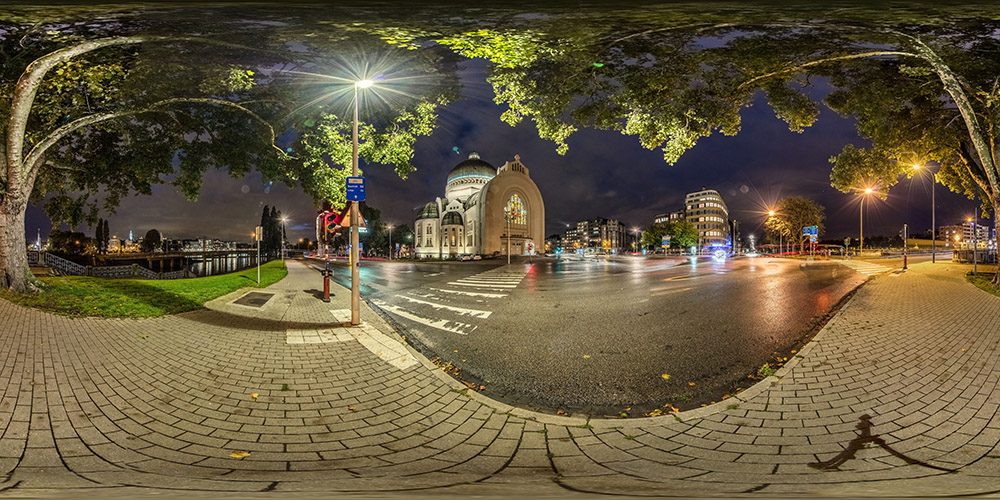
Saint Vincent by Night · View from Fétinne
Robert Toussaint · architecte liégeois · 1930 · vue nocturne
Guide :
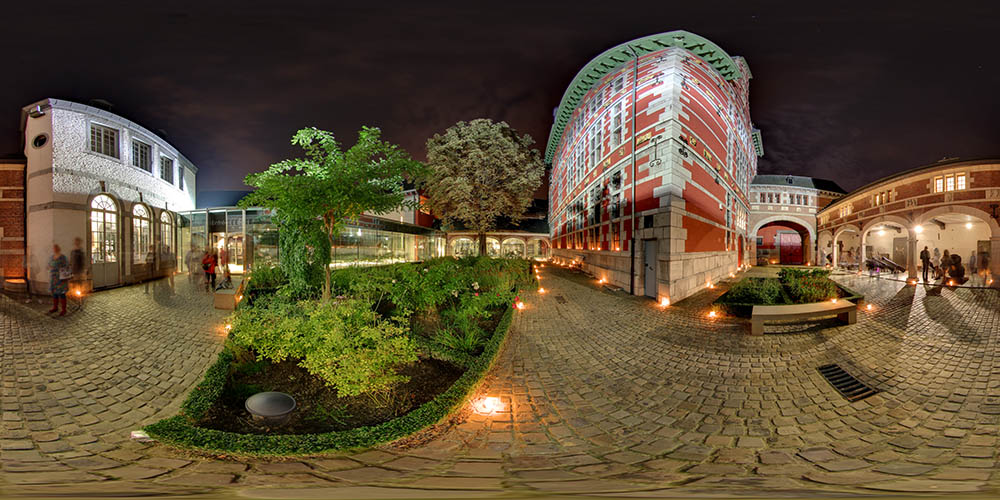
On the bank of the Meuse, at the meeting of rue de Fétinne and avenue Albert Mahiels, the great copper dome of Saint Vincent lights up in the night. Designed by Robert Toussaint and inaugurated on 15 June 1930 for the Liège International Exposition, the church adopts a central octagonal plan unusual in Belgium and a reinforced-concrete frame that makes it a technical landmark for inter-war religious architecture. What would you like to explore: its neo-Byzantine architecture, the history of the parish, or what the night reveals of the square?
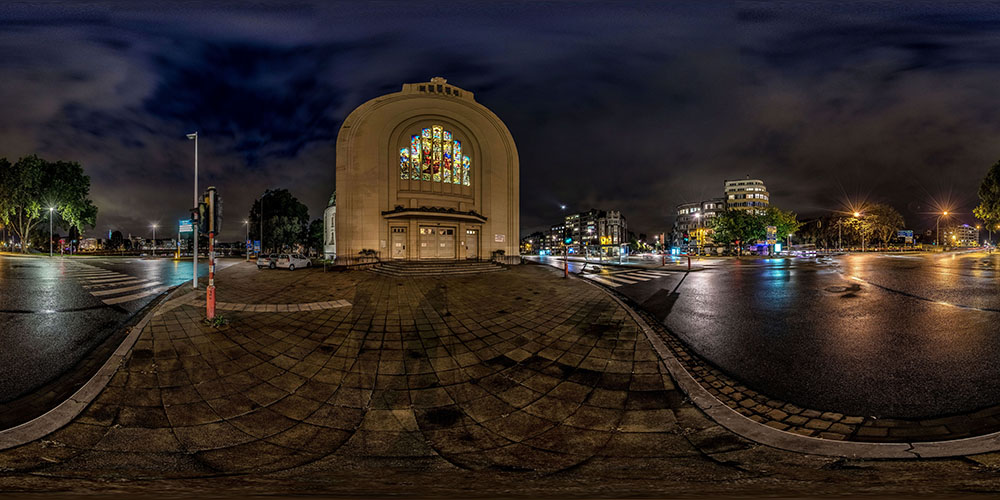
The Great Stained-Glass Window · Night View from the Forecourt
Robert Toussaint · architecte liégeois · 1930 · vue nocturne
Guide :
At the foot of Saint Vincent's west façade, the great arched stained-glass window glows in the night, lit from inside the church. On the forecourt, at the meeting of several avenues, the pale stone and the coloured glass compose an urban signal: a screen of figural images stretched across the façade. Designed by Robert Toussaint for the 1930 Liège International Exposition, the building reveals here its most visible side from the street. What would you like to explore: the window itself, the architecture, or the square around it?
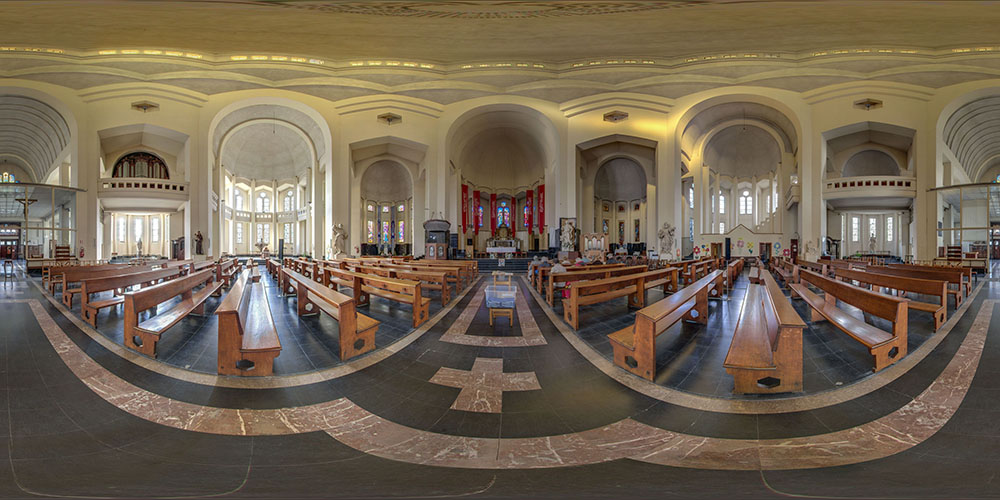
At the Centre of the Church · Octagonal Plan and Polychrome Marbles
Robert Toussaint · architecte liégeois · 1930 · vue intérieure
Guide :
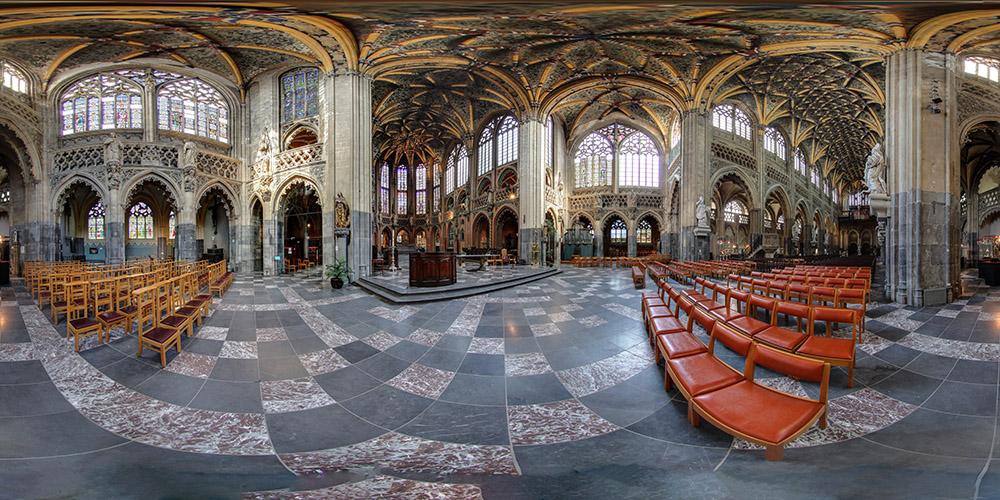
Beneath the great dome of Saint Vincent, the octagonal plan unfolds in eight bays rhythmed by round arches. On the floor, blue Belgian marble, red Balmoral granite and black stone trace a geometry that extends the architecture. At the far end, the chancel windows; all around, pale-wood pews, side niches and their statues. A deliberate reference to Hagia Sophia in Constantinople, served by a modern reinforced-concrete frame (1930). What would you like to explore: the Byzantine plan, the marbles, or the light?