Venue index
Sort
23 entries · 100 panoramas · 41,129 served
LGE-001
MUS — Museum
 PANO 13 · ÉQUIRECT.
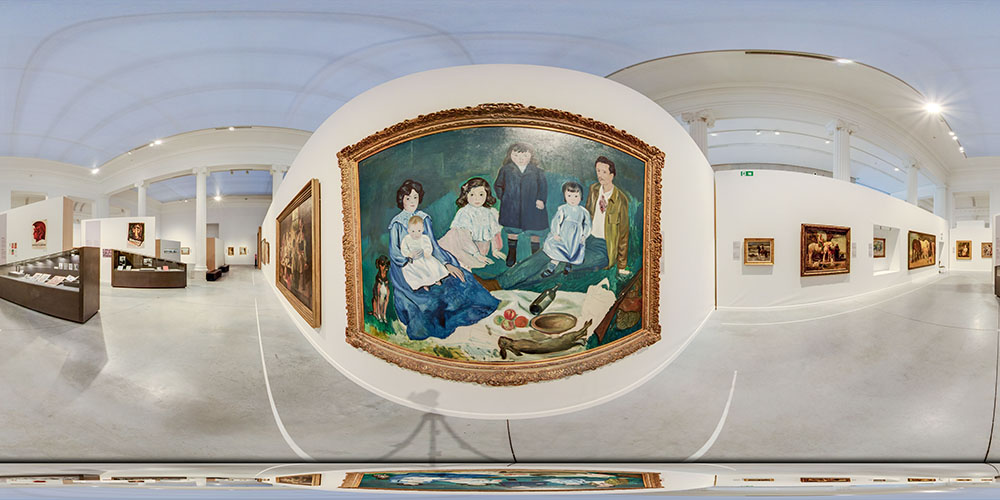
La Boverie
Liège Fine Arts Museum
A cabinet of masterpieces on the banks of the Meuse, in the Boverie park. Permanent collection from the 16th to the 21st century — from Lairesse to Picasso, Ingres and Chagall.
- Panoramas
- 13
- Visits
- 6,019
- Avg / pano
- 463
LGE-002
PAT — Heritage
 PANO 9 · ÉQUIRECT.
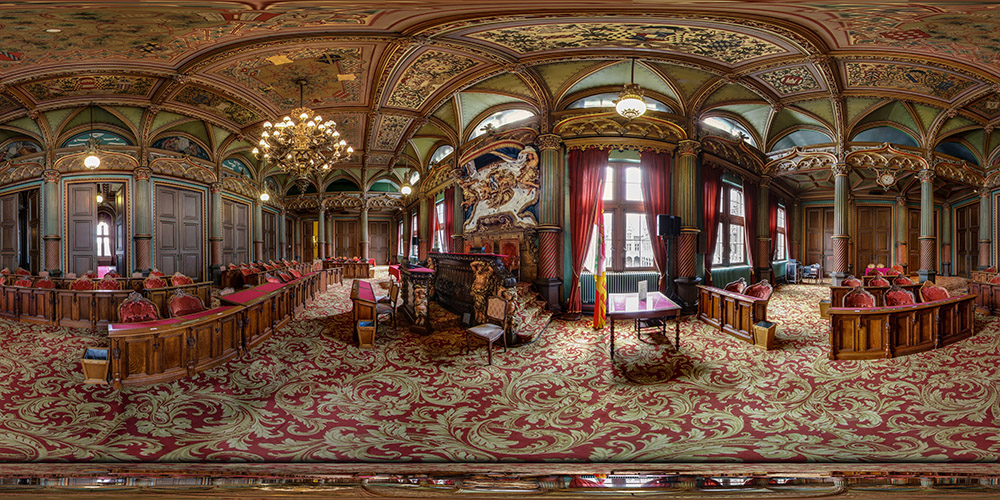
Prince-Bishops' Palace
Prince-Bishops' Palace of Liège
Place Saint-Lambert, at the heart of the city. Exceptional Heritage of Wallonia, awarded the European Heritage Label. Free guided tours every first Sunday of the month since 2024.
- Panoramas
- 9
- Visits
- 3,789
- Avg / pano
- 421
LGE-003
SCN — Stage
 PANO 3 · ÉQUIRECT.
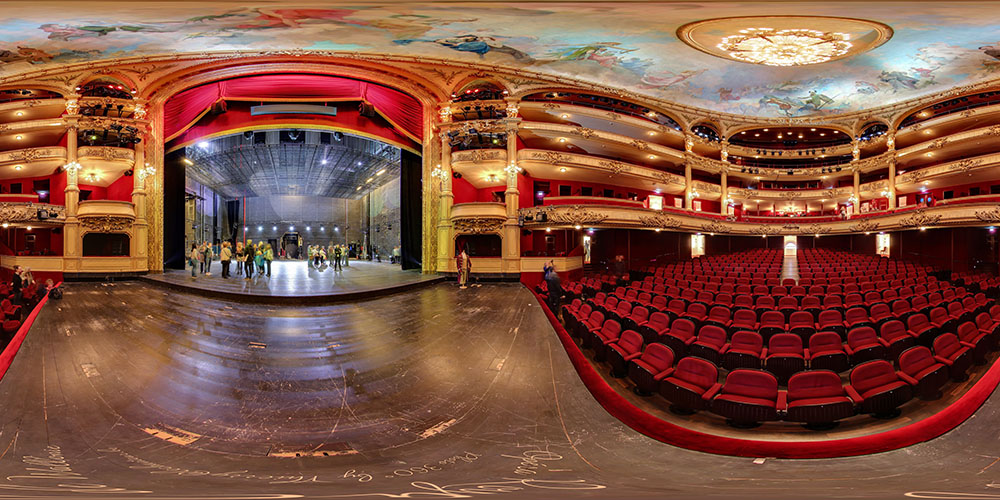
Royal Opera of Wallonia
Royal Opera of Wallonia-Liège
One of the three great opera houses of the Kingdom, alongside La Monnaie and the Vlaamse Opera. The Royal Theatre has stood on Place de l'Opéra since 1820. Ceiling painted by Émile Berchmans in 1903.
- Panoramas
- 3
- Visits
- 1,334
- Avg / pano
- 445
LGE-004
MUS — Museum
 PANO 4 · ÉQUIRECT.
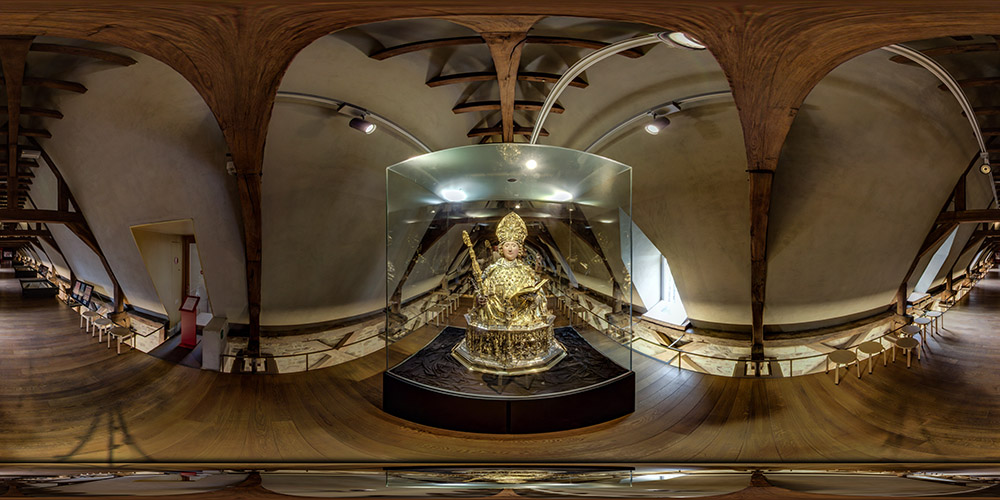
Cathedral Treasury
Treasury of Liège Cathedral
In the Gothic cloister of Saint-Paul Cathedral, a thousand years of Liège history. Mosan goldsmithing, reliquaries, Byzantine ivories, and the Virgin with the Butterfly, the oldest painting preserved in Liège, survivor of the 1468 sack.
- Panoramas
- 4
- Visits
- 1,605
- Avg / pano
- 401
LGE-005
SCN — Stage
 PANO 4 · ÉQUIRECT.
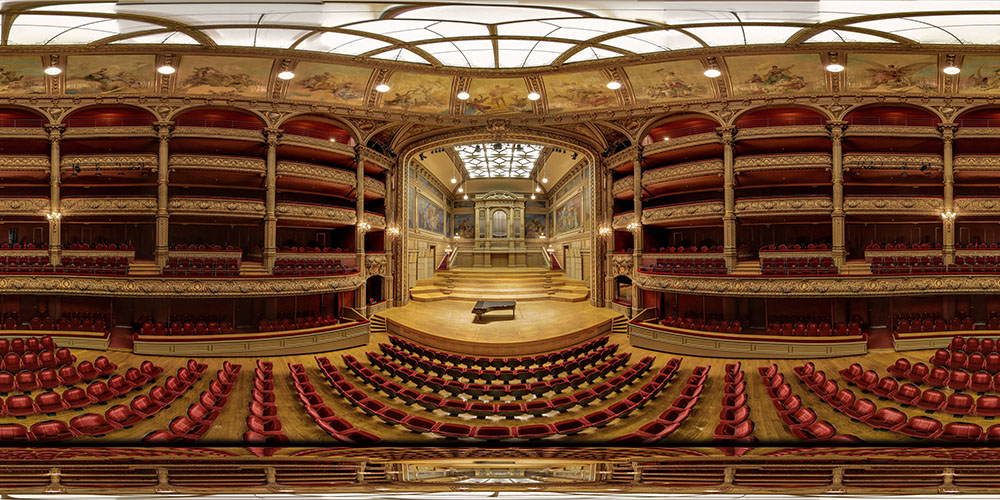
Philharmonic Hall
Liège Philharmonic Hall
Boulevard Piercot, in the Guillemins district. Inaugurated 30 April 1887, designed by Laurent Demany. Mahler premiered his 2nd Symphony outside Germany here in 1899. One of the finest acoustics in Belgium.
- Panoramas
- 4
- Visits
- 1,503
- Avg / pano
- 376
LGE-006
EGL — Church
 PANO 4 · ÉQUIRECT.
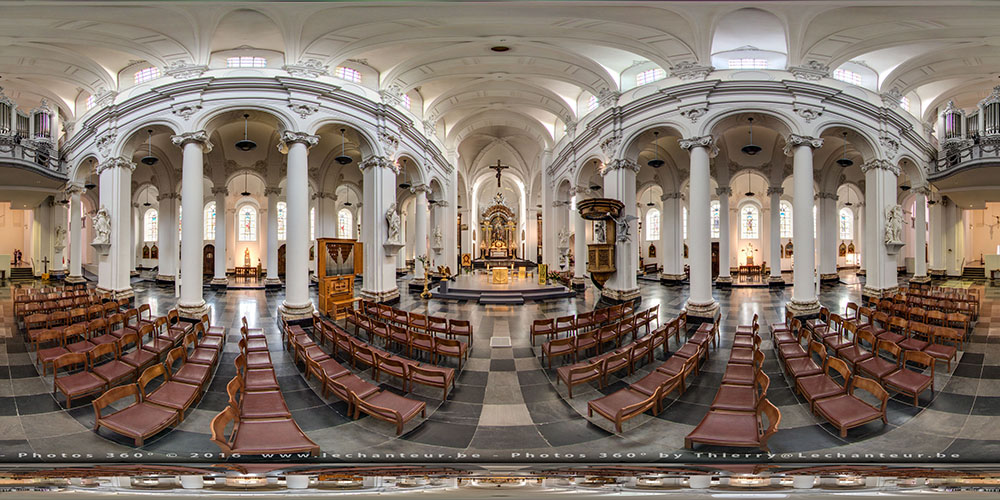
Saint Bartholomew
Saint Bartholomew Collegiate Church of Liège
The last of Liège's seven collegiate churches, consecrated in 1015 and rebuilt in the 11th-12th centuries. Rhineland twin-towered Westbau, polychrome façades restored 1999-2006. Home to the famous 12th-century baptismal font, listed among the Seven Wonders of Belgium.
- Panoramas
- 4
- Visits
- 1,658
- Avg / pano
- 415
LGE-007
MUS — Museum
 PANO 4 · ÉQUIRECT.
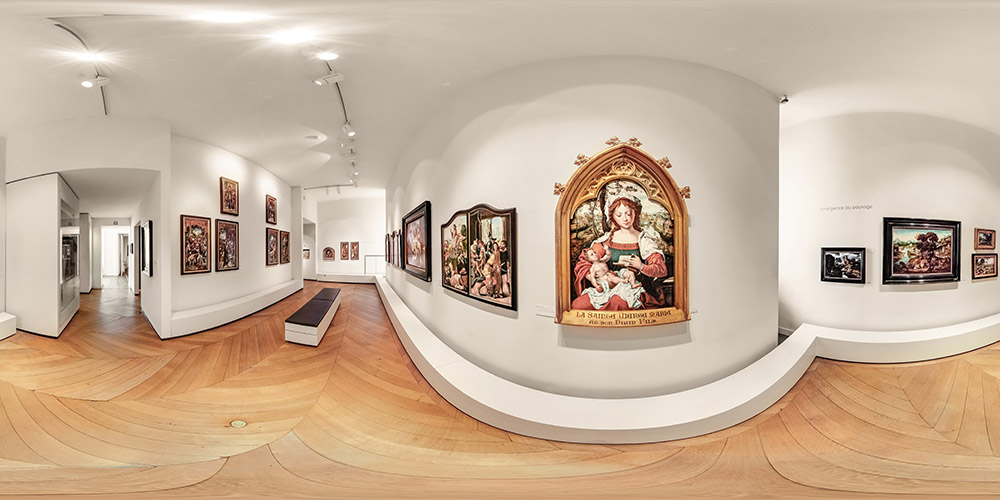
Grand Curtius
Grand Curtius Museum of Liège
On the banks of the Meuse, a palace of red brick and Namur limestone built from 1597 to 1605 for Jean Curtius, gunpowder supplier to the Spanish armies. Often cited as the archetype of the Mosan style. Since 2009, four former Liège museums have been gathered here — archaeology, arms, glass, religious and Mosan art — 7,000 years of history in more than 100,000 objects.
- Panoramas
- 4
- Visits
- 2,543
- Avg / pano
- 636
LGE-008
EGL — Church
 PANO 4 · ÉQUIRECT.
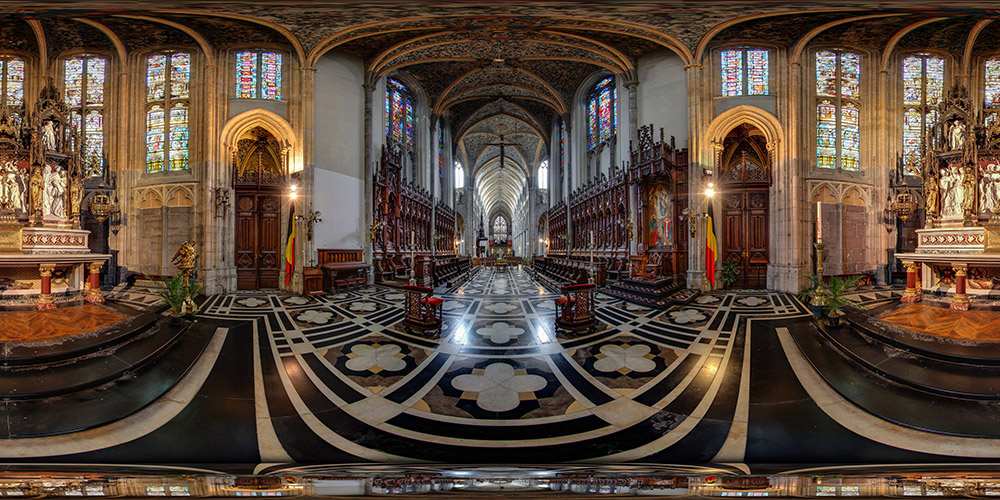
Saint-Paul Cathedral
Saint-Paul Cathedral of Liège
Founded in 966 by Bishop Eracle and consecrated by Notger in 972. A collegiate church until 1802, it became a cathedral after the destruction of Saint-Lambert by revolutionaries in 1795. Flat-ended Gothic choir from the 13th century, stained glass from 1557-1559 after Lambert Lombard, neo-Gothic stalls by J.J. Dehin (1881-1894).
- Panoramas
- 4
- Visits
- 2,460
- Avg / pano
- 615
LGE-009
EGL — Church
 PANO 4 · ÉQUIRECT.
Saint James
Saint James the Less Church of Liège
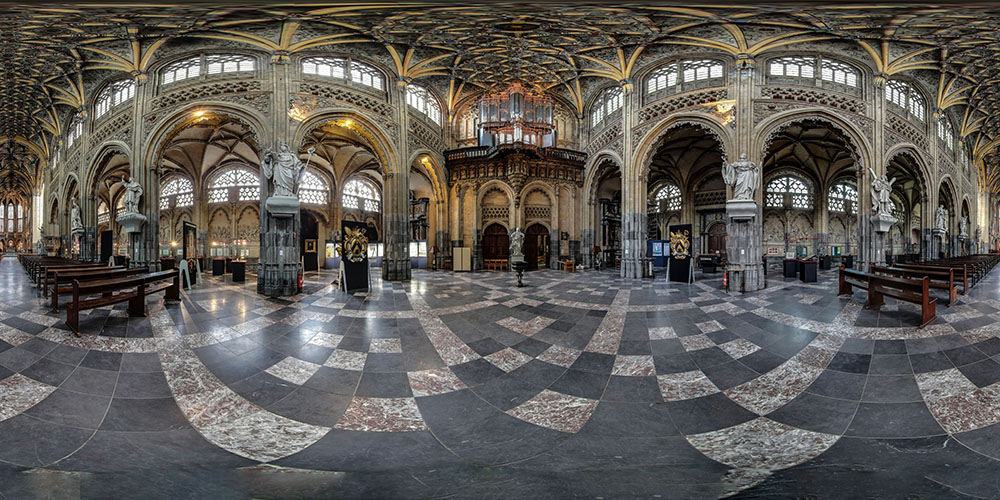
Former Benedictine abbey church founded in 1015 by Prince-Bishop Baldéric II. The present church, a masterpiece of flamboyant Gothic, was built from 1514 to 1538 by Arnold van Mulcken, architect of Érard de la Marck. More than 150 painted keystones in the nave, Renaissance stained glass of 1525, Renaissance organ case of 1600 on a Gothic rood screen of 1538. Exceptional Heritage of Wallonia.
- Panoramas
- 4
- Visits
- 1,591
- Avg / pano
- 398
LGE-010
EGL — Church
 PANO 3 · ÉQUIRECT.
Saint Martin
Saint-Martin Basilica of Liège
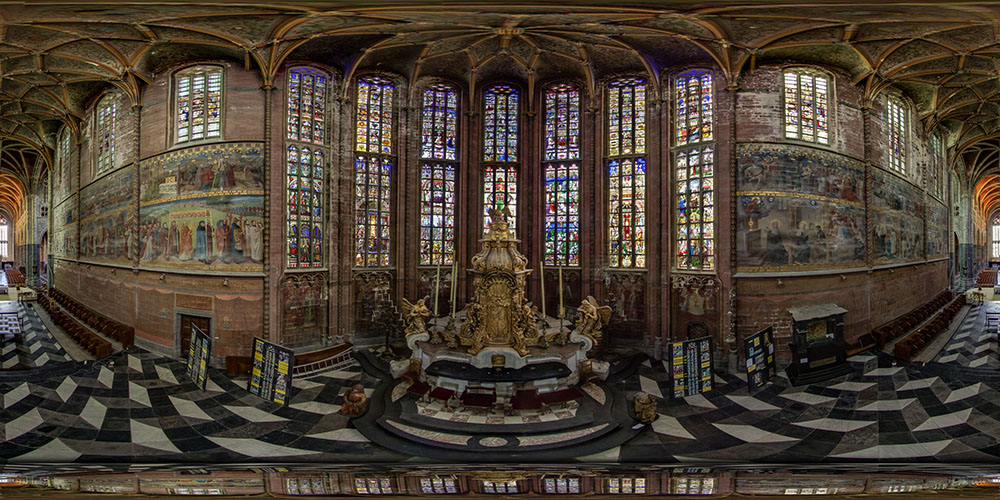
Founded around 963 by Bishop Eracle on the Publémont hill, the former collegiate church of Saint-Martin was rebuilt after the fire of 1312. It combines a 16th-century Gothic choir, remarkable Renaissance stained glass and a Corpus Christi mural cycle by Adolphe Tassin (1902-1907). The first celebration of Corpus Christi took place here in 1246, which is why the church has been a minor basilica since 1886.
- Panoramas
- 3
- Visits
- 1,182
- Avg / pano
- 394
LGE-011
PAT — Heritage
 PANO 3 · ÉQUIRECT.
City Hall · La Violette
Liège City Hall · La Violette
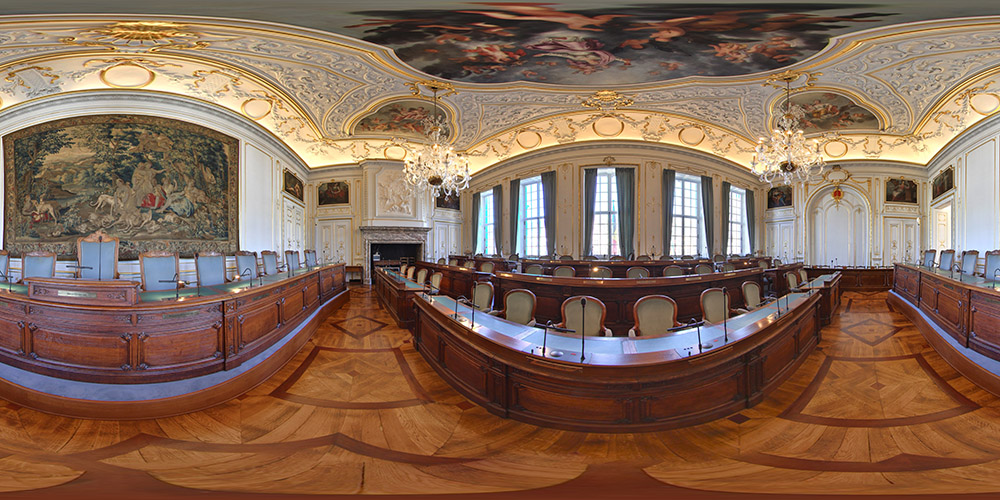
On Place du Marché, facing the Perron, Liège City Hall, traditionally known as La Violette, is the heart of municipal power in Liège. Rebuilt in the 18th century, this U-shaped brick and limestone building preserves richly decorated rooms, including the Council Chamber with its ceiling of the Three Virtues.
- Panoramas
- 3
- Visits
- 1,229
- Avg / pano
- 410
LGE-012
PAT — Heritage
 PANO 5 · ÉQUIRECT.
La Cité Miroir
La Cité Miroir · Former Sauvenière Baths
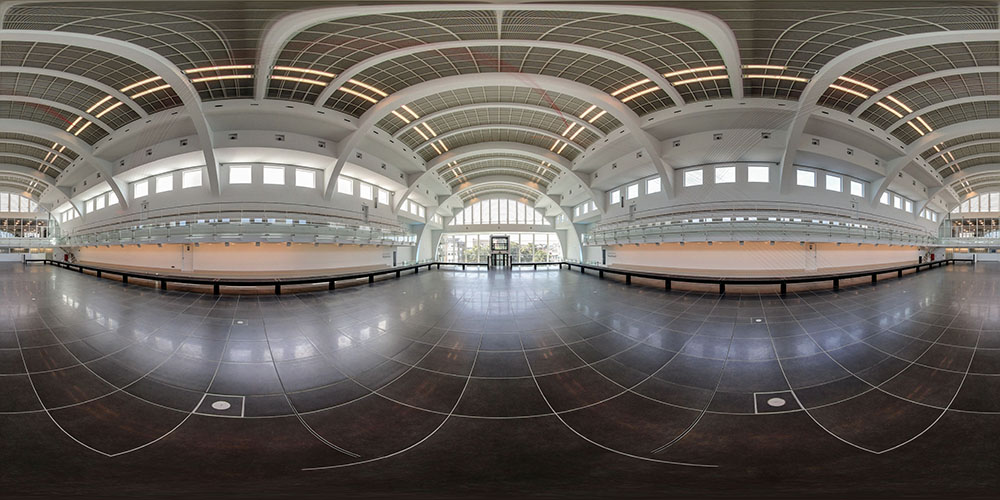
In the heart of Liège, the former Sauvenière swimming pool became in 2014 a civic space devoted to culture, critical thinking and remembrance. Immersive routes, exhibitions, performances, talks, concerts and screenings now bring life to this emblematic 13,000 m² building.
- Panoramas
- 5
- Visits
- 1,789
- Avg / pano
- 358
LGE-013
SCN — Stage
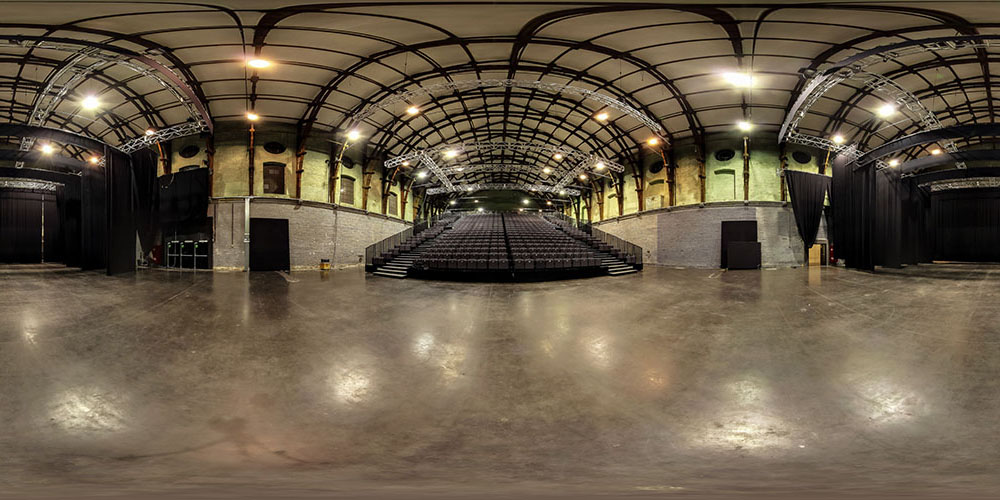 PANO 4 · ÉQUIRECT.
Manège Fonck
Modular Main Hall of the Fonck Barracks
In Outremeuse, the Manège Fonck is a former military riding hall turned performance venue. Its vast brick nave, listed roof structure and raw atmosphere now host the Festival de Liège, concerts, theatre, performances and events in modular configurations.
- Panoramas
- 4
- Visits
- 1,355
- Avg / pano
- 339
LGE-014
PAT — Heritage
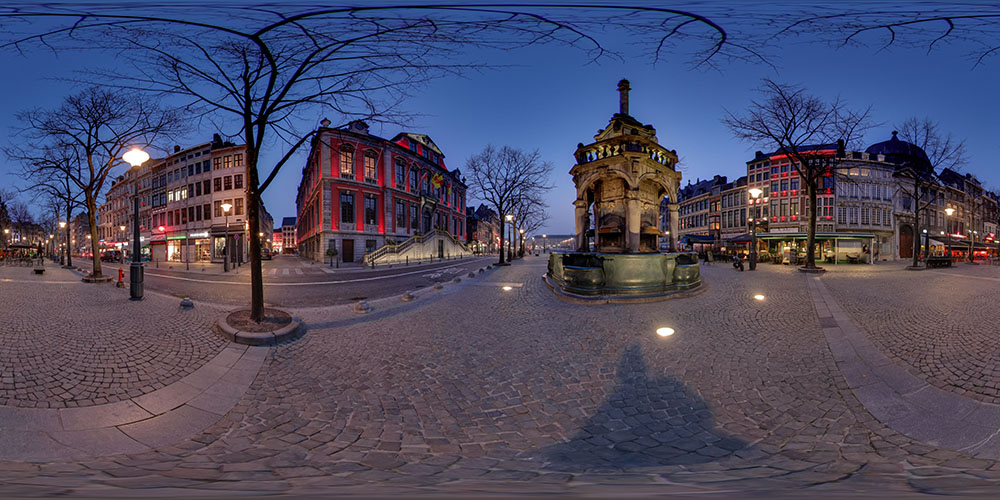 PANO 2 · ÉQUIRECT.
Place du Marché
The Perron and La Violette by Night
At the historic heart of Liège, Place du Marché brings together the Perron, symbol of the city's freedoms, and City Hall, La Violette. By winter night, the lit façades and bare trees give this civic setting an almost theatrical atmosphere.
- Panoramas
- 2
- Visits
- 733
- Avg / pano
- 367
LGE-015
MEM — Memorial
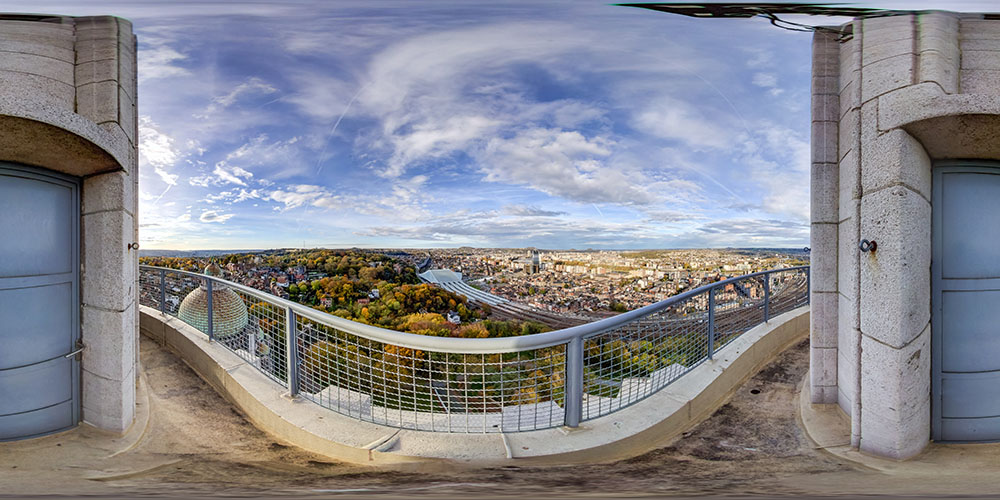 PANO 6 · ÉQUIRECT.
Inter-Allied Memorial
Cointe Inter-Allied Memorial · Liège
On Cointe hill, an Art Deco tower 75 metres tall designed by Joseph Smolderen and inaugurated in 1937 in the presence of King Leopold III. It commemorates the Allied soldiers fallen during the First World War. Neighbour of the Sacred Heart Basilica, together they form one of the most recognisable skylines of Liège. From the top, an open view over the city, the Meuse and the Guillemins station.
- Panoramas
- 6
- Visits
- 2,138
- Avg / pano
- 356
LGE-016
EGL — Church
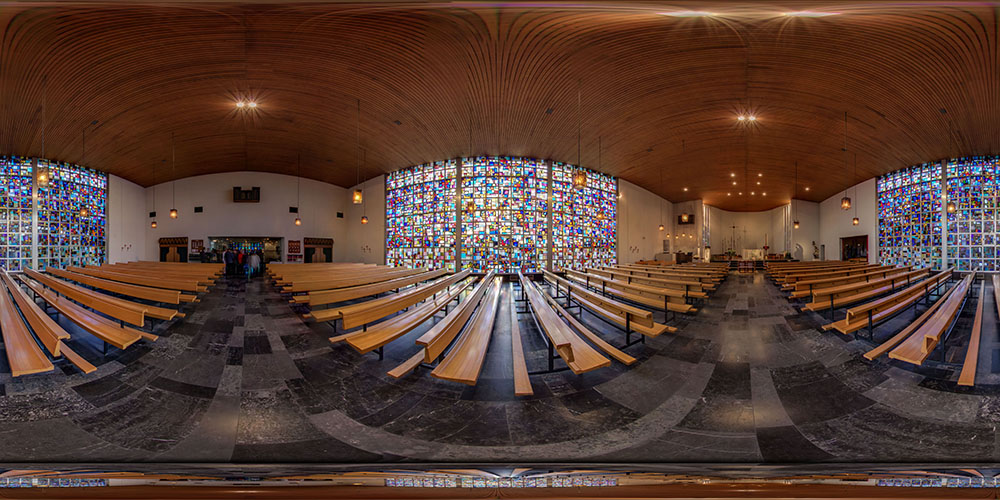 PANO 2 · ÉQUIRECT.
Saint Juliana
Saint Juliana Church of Liège
In Xhovémont, a modern church built between 1959 and 1969 after a crypt completed in 1937. Concrete structure, timber ceiling, large abstract stained-glass walls and an interior enhanced by Val Saint-Lambert pieces. A strong landmark of post-war religious architecture in Liège.
- Panoramas
- 2
- Visits
- 754
- Avg / pano
- 377
LGE-017
PAT — Heritage
 PANO 1 · ÉQUIRECT.
La Grand Poste
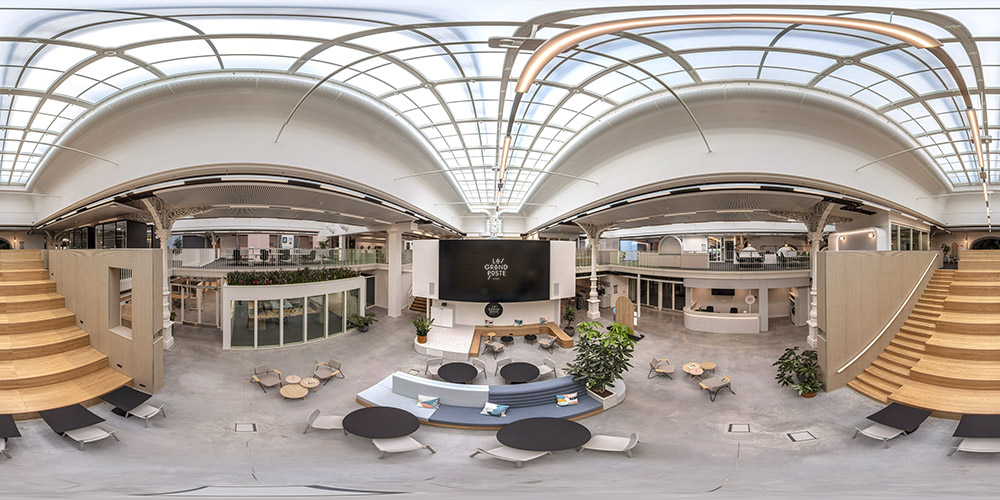
La Grand Poste · cultural and creative hub
Former central post office, built from 1896 to 1901 by Liège architect Edmond Jamar in a neo-Gothic-Renaissance style inspired by the Prince-Bishops' Palace. Disused since 2002, listed, and renovated from 2017 to 2021 by the Altiplan studio. Since September 2021, this 8,000 m² building has been a creative third place bringing together 200 coworking seats, meeting and conference rooms, a food market, an artisanal brewery and a rooftop overlooking the Meuse.
- Panoramas
- 1
- Visits
- 403
- Avg / pano
- 403
LGE-018
MEM — Memorial
 PANO 3 · ÉQUIRECT.
Ardennes American Cemetery
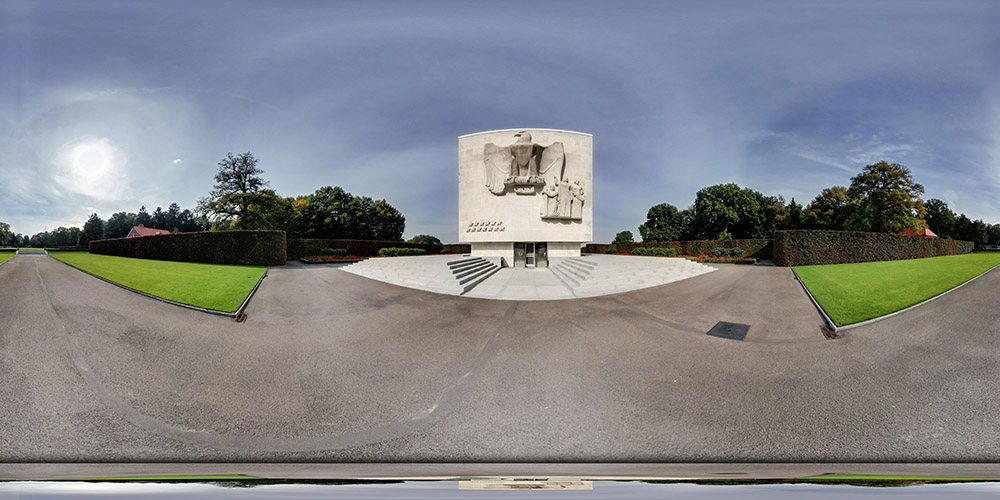
Ardennes American Cemetery and Memorial
In Neupré, in a green bower, 5,162 American soldiers rest in this cemetery recognised as a historical memorial by Wallonia. One of fourteen permanent American cemeteries outside the United States, it honours fighters who fell largely during the Battle of the Bulge in December 1944 and January 1945.
- Panoramas
- 3
- Visits
- 1,201
- Avg / pano
- 400
LGE-019
EGL — Church
 PANO 3 · ÉQUIRECT.
Saint Vincent
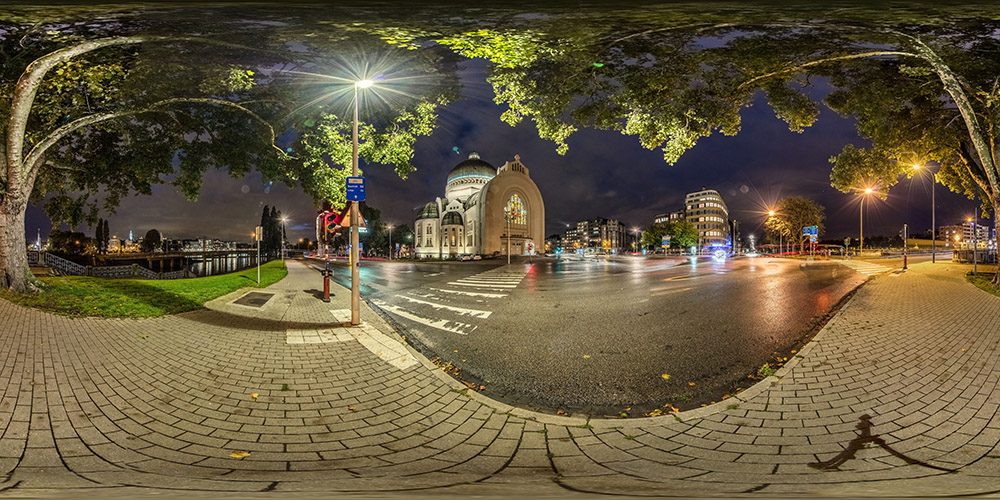
Saint Vincent Church of Liège
In the Fétinne district, at the meeting of rue de Fétinne and avenue Albert Mahiels, the present church was inaugurated on 15 June 1930. The work of Liège architect Robert Toussaint, winner of a competition held in 1928 ahead of the 1930 Liège International Exposition, it adopts a central octagonal plan crowned by a great copper dome, in a neo-Byzantine style touched with Art Deco. Its reinforced-concrete structure and prefabricated elements made it a technical landmark for inter-war religious architecture. The parish itself is much older, going back to the 12th century under prince-bishop Baldéric II.
- Panoramas
- 3
- Visits
- 1,062
- Avg / pano
- 354
LGE-020
SCN — Stage
 PANO 5 · ÉQUIRECT.
Théâtre de Liège
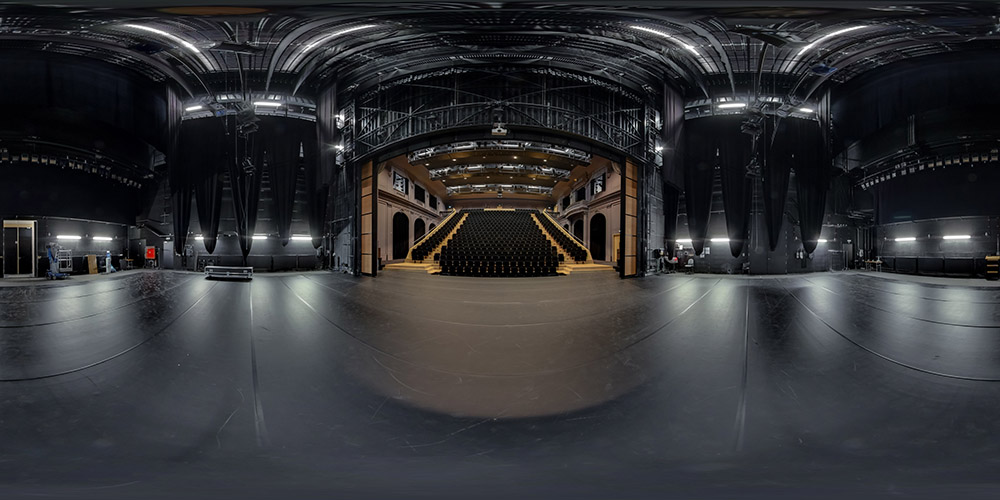
Théâtre de Liège · Former Société libre d'Émulation
On Place du XX août, the Théâtre de Liège has occupied since 2013 the former seat of the Société libre d'Émulation, founded in 1779 by Prince-Bishop Velbrück. The neoclassical building, burned down by German troops on 20 August 1914 then rebuilt in 1939 by Julien Koenig, was listed in 1998 and restored by the studio Pierre Hebbelinck and Pierre de Wit. The renovation combines 7,800 m² of listed façades, concrete, glass and oak, two modern halls (Grande Main 558 seats, Œil vert 145 seats) and the activity of a theatre d'Europe.
- Panoramas
- 5
- Visits
- 1,704
- Avg / pano
- 341
LGE-021
PAT — Heritage
 PANO 5 · ÉQUIRECT.
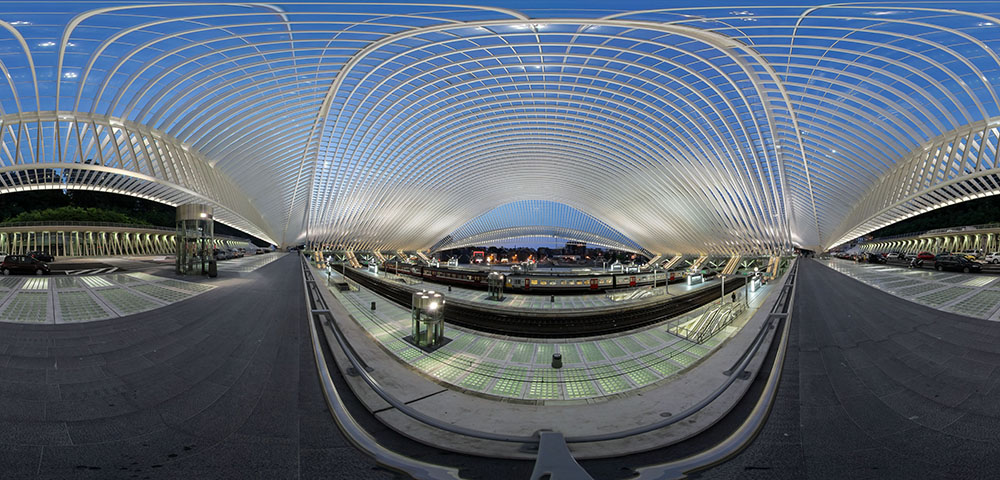
Guillemins Station
Liège-Guillemins Station · Santiago Calatrava
On the left bank of the Meuse, Liège-Guillemins station is the work of Spanish architect-engineer Santiago Calatrava. Inaugurated in 2009 after a decade of construction, it replaces the 1958 station and was designed for the arrival of high-speed rail. A steel-and-glass vault resting on white arches, blue-stone floors, no proper façades: the station is fully through-going, open onto the city on one side and onto the Cointe hill on the other. Often described as a modern cathedral, it has become a landmark of the Liège skyline.
- Panoramas
- 5
- Visits
- 2,009
- Avg / pano
- 402
LGE-022
EGL — Church
 PANO 3 · ÉQUIRECT.
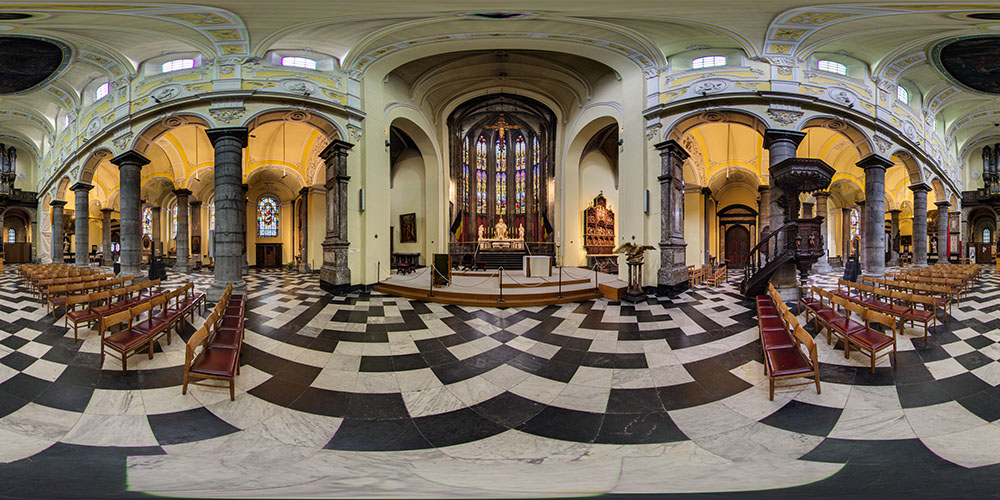
Saint Denis
Saint-Denis Collegiate Church of Liège
Place Saint-Denis, at the heart of Liège. Founded in 987 by prince-bishop Notger and consecrated in 1011, the Saint-Denis collegiate church holds the oldest nave in the city and a massive Romanesque tower built into Notger's defensive wall. The Romanesque choir was replaced by a Gothic choir in the 15th century, and the interior reshaped in the Baroque taste in the 17th. Listed as Exceptional Heritage of Wallonia since 2016. It preserves a Brabant retable of the Passion and Life of Saint Denis (1522-1537), an organ case from 1589 and the statue of Our Lady of the Pont des Arches.
- Panoramas
- 3
- Visits
- 952
- Avg / pano
- 317
LGE-023
CAF — Bar
 PANO 6 · ÉQUIRECT.
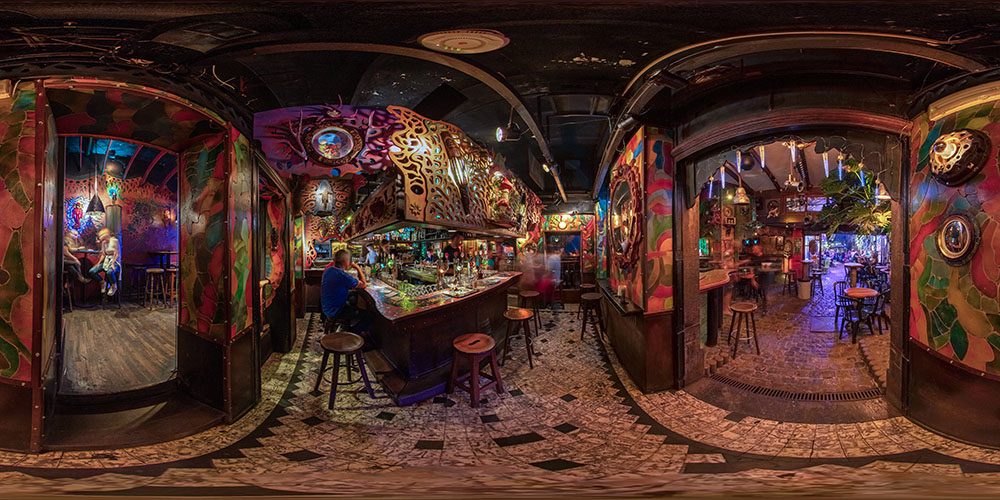
Le Pot au Lait
Le Pot au Lait · Liège bar
Rue des Sœurs de Hasque, a stone's throw from Saint-Paul Cathedral. Born in the 1960s from a ULiège student initiative, Le Pot au Lait takes its name from La Fontaine's fable. Psychedelic décor, local beers, rock and reggae. In January 2025, the <em>European Bar Guide</em> ranked it 8th best bar in Europe.
- Panoramas
- 6
- Visits
- 2,116
- Avg / pano
- 353